
CALL FOR PAPERS

Audio, Acoustics, Music (AAM)

Biomedical SIP & Systems (BioSPS)

Image, Video, & Multimedia (IVM)

Machine Learning & Data Analytics
(MLDA)

Multimedia Security & Forensics
(MSF)

SIP Theory & Methods (SIPTM)

SIP Systems Designs (SPS)

Speech & Language (SLP)

SIP Education (SIPE)

Wireless Communication & Networking (WCN)
SEND YOUR PAPER NOW!

JOIN US!

WHEN IS EVENT ?
13th Monday
July, 2026

WHERE IS EVENT ?
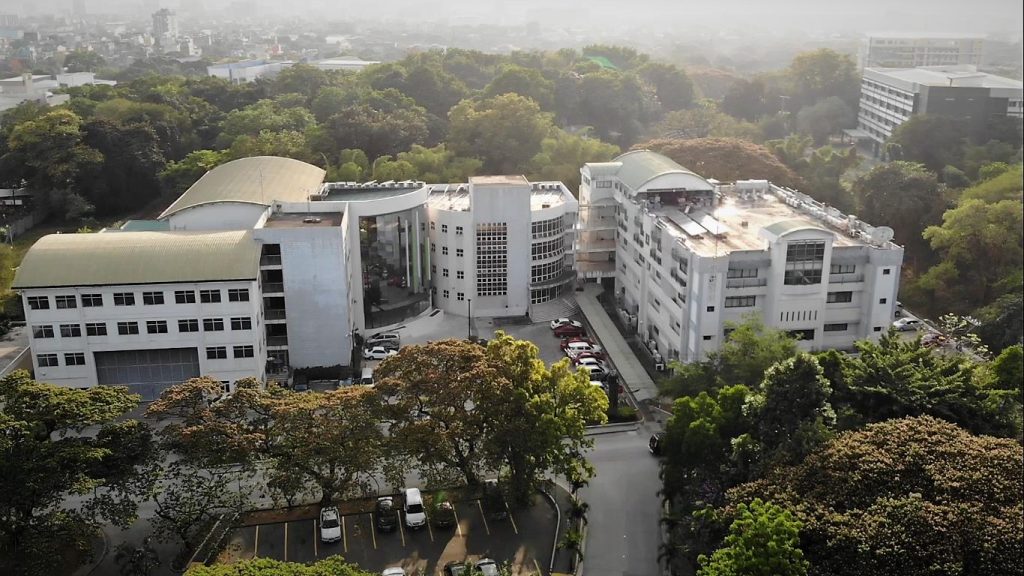
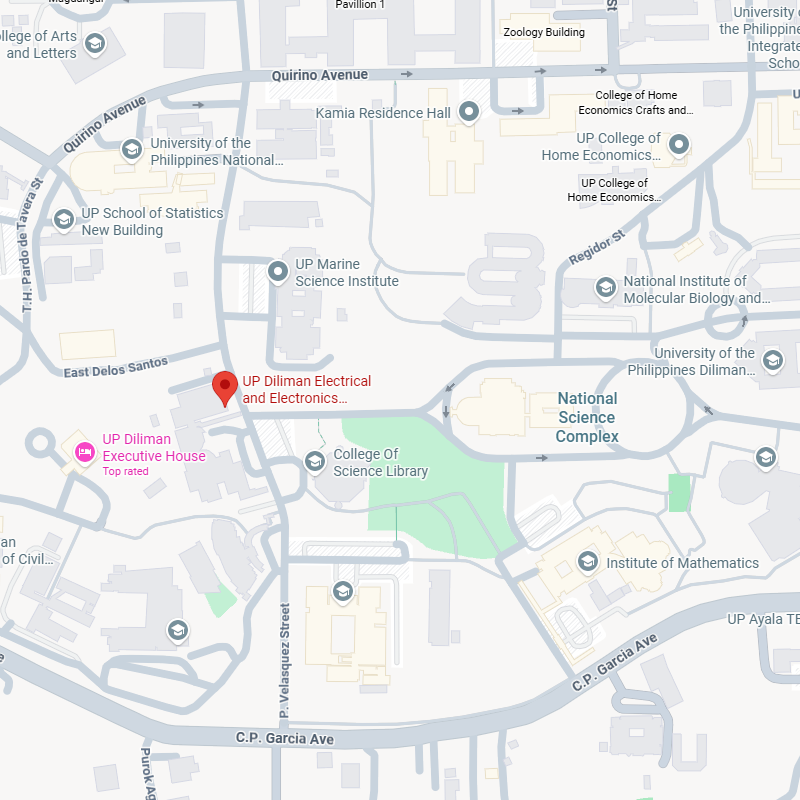
Room 123, EEEI Building, Velasquez St., UP Diliman
QC, Philippines 1101
PROGRAM SCHEDULE
9:00 – 9:05
National Anthem
9:05 – 9:10
Welcome Remarks (UP and EEE Institute)
9:10 – 9:15
Workshop Information
9:15 – 9:20
Introduction of Prof. Toshihisa Tanaka
9:20 – 10:10
Talk by Prof. Toshihisa Tanaka
10:10 – 10:40
Break
10:40 – 10:45
Introduction of Prof. Kosin Chamnongthai
10:45 – 11:30
Talk by Prof. Kosin Chamnongthai
11:40 – 11:45
Introduction of Prof. Jing-Ming Guo
11:45 – 12:30
Talk by Prof. Jing-Ming Guo
12:30 – 14:00
Lunch
14:00 – 16:00
Poster Presentations
16:00 onwards
Afternoon break
Closing Session
ORGANIZED BY


EVENT SPEAKERS
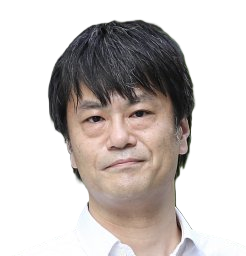
PROF. TOSHIHISA TANAKA, PHD
Tokyo University of Agriculture and Technology
Professor Tanaka received his B.E., M.E., and Ph.D. degrees from the Tokyo Institute of Technology. He has had an illustrious international career, including positions as a JSPS Research Fellow, a Research Scientist at the RIKEN Brain Science Institute, a Royal Society Visiting Fellow at Imperial College London, and a Visiting Faculty Member at the University of Hawaii at Manoa. He is currently a Professor in the Department of Electrical Engineering and Computer Science at TUAT, and recently assumed the role of Vice-Trustee and Assistant to the President at the university. He also heads the Research Unit of Informatics for Human-Animal Interaction at TUAT’s One Welfare Research Institute.
Professor Tanaka’s research centers on signal processing and machine learning, with a particular focus on brain and biomedical signal analysis, brain–computer interfaces (BCIs), and human–animal interaction. He has been a pioneer in advancing biosignal informatics as an interdisciplinary research field, applying techniques such as graph signal processing for EEG analysis, motor-imagery EEG classification, epileptic seizure detection, and steady-state visually evoked potential (SSVEP) based BCI systems. He has over 100 journal publications and is the leading co-editor of Signal Processing and Machine Learning for Brain–Machine Interfaces (IET, 2018) and a co-editor of Signal Processing Techniques for Knowledge Extraction and Information Fusion (Springer, 2008).
He served as General Co-Chair of APSIPA ASC 2021, held in Tokyo, and previously held the position of Vice President for Member Relations and Development. He currently serves as a Member-at-Large on the APSIPA Board of Governors, is a Senior Area Editor of IEEE Signal Processing Letters, and a Senior Member of IEEE. He is also the General Chair of ICASSP 2028 in Tokyo and the Co-founder and CTO of Sigron, Inc.
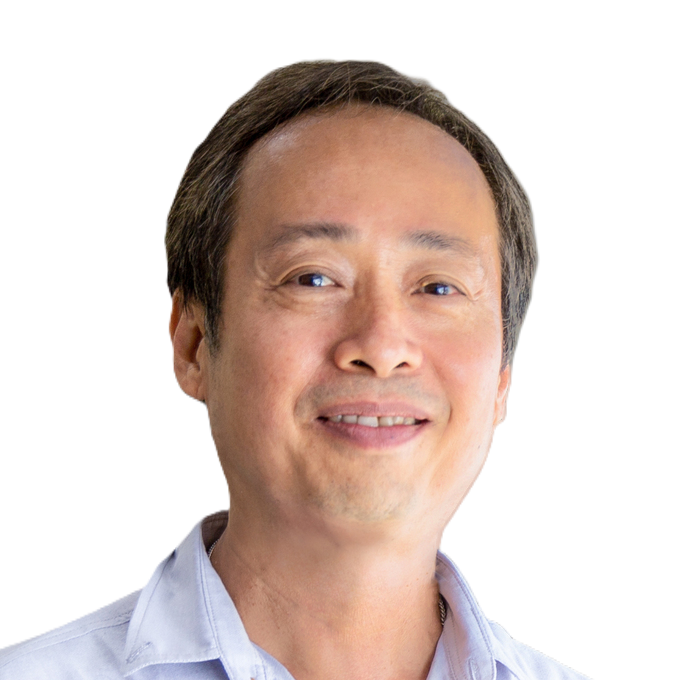
PROF. KOSIN CHAMNONGTHAI, PHD
King Mongkut’s University of Technology Thonburi
Professor Chamnongthai is a Professor at the Faculty of Engineering, KMUTT, his research spans biomedical engineering, biomedical imaging, computer vision, image processing, and pattern recognition.
Professor Chamnongthai’s research focus on applying signal processing and artificial intelligence to real-world healthcare and assistive technology challenges. His recent work includes 3D sign language recognition using deep Fourier networks, gaze-based gesture and human-intention recognition for assistive interfaces, 3D point cloud reconstruction from monocular video, and deep learning-based video summarization. He has also made significant contributions to biomedical signal and sound analysis, including attention-based transfer learning for obstructive sleep apnea classification from snore sounds, and the development of personalized Q-learning and fuzzy-logic-based tablet game interventions for children with Autism Spectrum Disorder (ASD). His research portfolio reflects KMUTT’s strategic focus on smart healthcare, digital transformation, and information technology.
Professor Chamnongthai currently serves as President-Elect of APSIPA and will assume the Presidency in 2026. His efforts in fostering international collaboration and promoting signal and information processing research across the Asia-Pacific region has been instrumental in the continued growth of APSIPA.
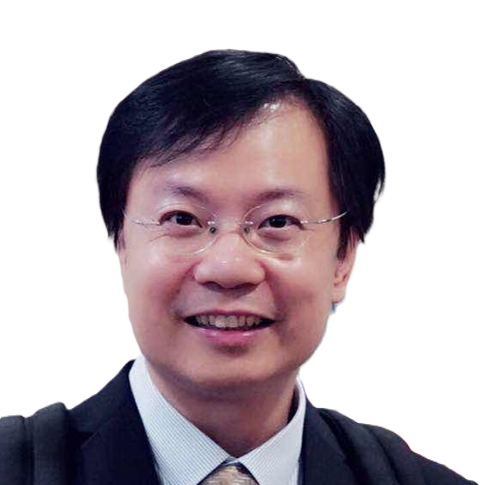
PROF. JING-MING GUO, PHD
National Taiwan University of Science and Technology
Professor Guo received his Ph.D. degree in Communication Engineering from National Taiwan University in 2004. He is currently a Distinguished Professor in the Department of Electrical Engineering and the Dean of the College of Industry-Academia Innovation at NTUST. He also serves as Director of the Advanced Intelligent Image and Vision Technology Research Center. Throughout his career, he has been a Visiting Scholar at Columbia University in New York and at the University of California, Santa Barbara. Since 2022, he has been seconded to the Industrial Technology Research Institute (ITRI) of Taiwan as Chief Technology Officer (CTO) of the Service Systems Technology Center and the Information and Communications Research Laboratories.
Professor Guo’s research focuses on big data signal processing, artificial intelligence, Generative AI, digital image and video processing, computer vision, biometrics recognition, digital halftoning, and multimedia security. He has received numerous prestigious awards, including multiple Best Paper Awards at IEEE ICCE-TW, IS3C, ICSSE, and ICS conferences, the Outstanding Contribution Award from the Taiwan Consumer Electronics Society (2021), the Outstanding Electrical Engineering Professor Award from the Chinese Institute of Electrical Engineering (2016), and the Outstanding Industry-Academia Collaboration Award from the Ministry of Science and Technology of Taiwan (2013). In 2025, he was elevated to IEEE Fellow in recognition of his outstanding contributions.
Professor Guo was General Chair of APSIPA ASC 2023 in Taipei, Technical Program Co-Chair of IEEE ICIP 2023 and IEEE ICCE 2025, and previously served as Chair of the IEEE Signal Processing Society Taipei Chapter and President of the IET Taipei Local Network. He is currently a Member-at-Large on the Board of Governors of APSIPA. He also serves as an Associate Editor for several leading journals, including IEEE Transactions on Image Processing, IEEE Transactions on Circuits and Systems for Video Technology, IEEE Transactions on Multimedia, and IEEE Signal Processing Letters. He is a Fellow of IEEE, AAIS, AIIA, and IET.
CONTACT US
-
UP EEEI DIGITAL SIGNAL PROCESSING LABORATORY

dsp@eee.upd.edu.ph

(02) 8925 2958